Why Your About Page Matters More Than You Think
Your About page is often the second page potential clients visit—right after your homepage. Yet many lawyers treat it as an afterthought, cramming in credentials and hoping for the best. The truth is, your About page is a conversion tool. It's where prospects decide whether to pick up the phone or move on to a competitor.
An effective About page answers a simple question: "Why should I trust you with my legal matter?" It builds credibility, demonstrates your expertise, and shows that you understand your clients' needs. For solo practitioners and small law firms, it's your chance to stand out from larger competitors by showcasing your unique approach and personal connection to your practice.
The Core Elements of a Converting About Page
Start with Your Client's Problem, Not Your Credentials
Don't begin with "I graduated from law school in 2010." Begin with "I help small business owners protect their intellectual property so they can focus on growth." Lead with the value you provide, not the letters after your name. Your potential clients care about their problems first and your qualifications second.
Frame your expertise in terms of client outcomes. Instead of listing practice areas, explain what clients experience when they work with you. This immediately resonates with visitors who are searching for solutions, not just lawyers.
Tell Your Professional Story
People connect with stories, not resumes. Share why you became a lawyer and what drives your practice today. Did a personal experience inspire you to focus on family law? Did you see a gap in the market that motivated you to specialize in employment law? These details humanize you and create emotional connection.
Your story should be authentic and concise. Two to three paragraphs are sufficient. Focus on the turning point that shaped your practice, not your entire career history. This approach makes you memorable and differentiates you from competitors with generic bios.
Highlight Relevant Credentials and Experience
Now that you've built connection, include your credentials strategically. List your education, bar admissions, certifications, and years of experience. But go beyond the basics—mention specific achievements, notable cases (respecting client confidentiality), speaking engagements, or publications that demonstrate your expertise.
If you serve a particular niche or geography, make that clear. Specificity builds trust. "I represent contractors in construction disputes across the Northeast" is more compelling than "I handle commercial litigation."
Address Common Client Concerns
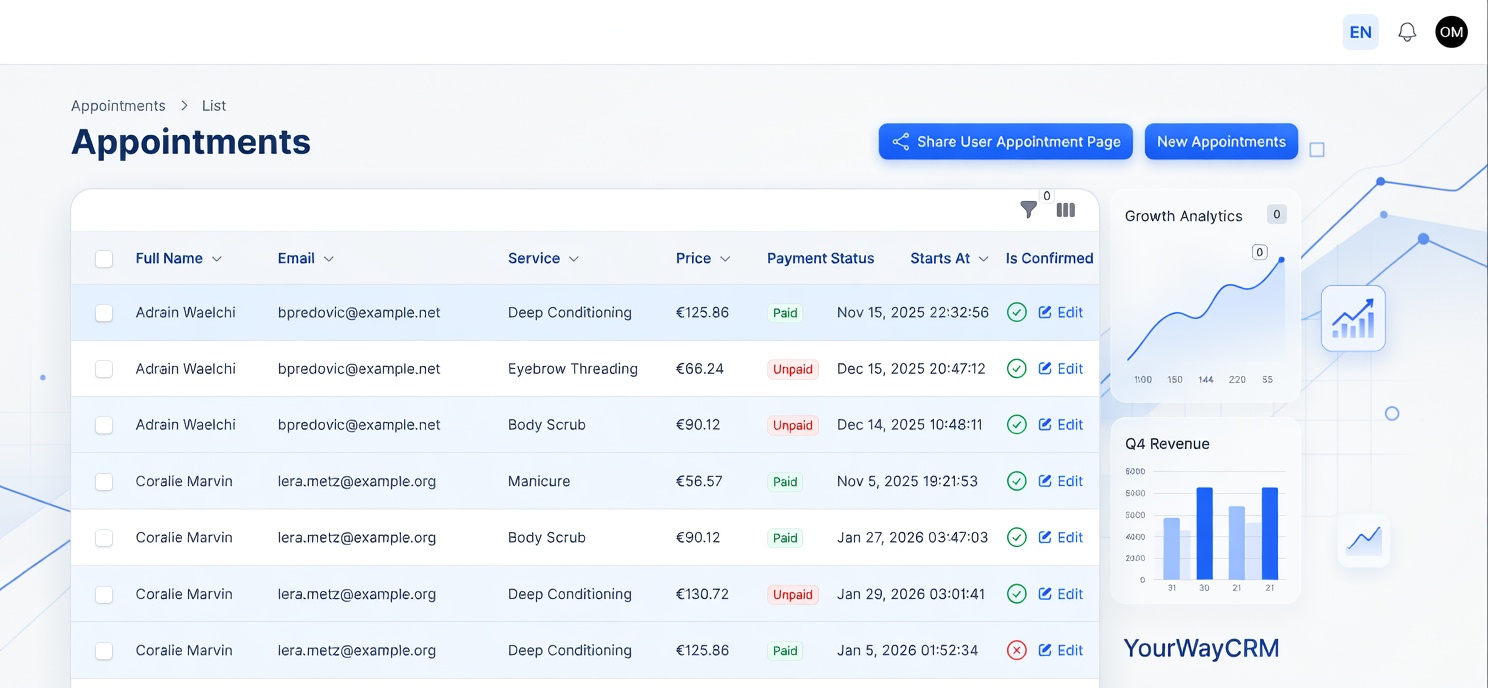
Your About page should preemptively answer questions that prospects have. Do you offer flat fees? Do you provide free consultations? Are you available for evening or weekend appointments? Do you use client management software like YourWayCrm to keep clients updated on their matters? These details reduce friction and move prospects closer to conversion.
Consider addressing: your communication style, how you bill, your typical client profile, your response time, and what clients can expect when working with you. This transparency builds confidence.
Structure and Design Considerations
Keep It Scannable
Most visitors won't read every word. Use short paragraphs, subheadings, and bullet points to break up content. A well-formatted About page is easier to navigate and more likely to hold attention than a wall of text.
Include a Professional Photo
A high-quality headshot or office photo humanizes your practice. People prefer working with lawyers they can "see." Invest in professional photography—it pays dividends in client conversion and brand perception.
Add a Clear Call-to-Action
Don't leave visitors wondering what to do next. Include a prominent call-to-action button: "Schedule a Consultation," "Call Us Today," or "Get in Touch." Make it easy for interested prospects to take the next step. If you use YourWayCrm for appointment scheduling, link directly to your booking page.
What to Avoid on Your About Page
- Overly formal or legal language that sounds robotic
- Lengthy paragraphs that discourage skimming
- Outdated information or photos
- Excessive self-promotion without client benefit focus
- Missing contact information or clear next steps
- Typos or grammatical errors that undermine credibility
Optimize for Search and Conversion
Include relevant keywords naturally throughout your About page—terms like your practice areas, location, and client type. This helps with local search visibility. However, never sacrifice readability for keywords. Your primary goal is converting visitors into clients, not gaming search algorithms.
Update your About page regularly. If you've earned new credentials, taken on a practice area, or changed your approach, refresh the content. An outdated About page signals that your firm isn't actively engaged with its practice.
The Bottom Line
Your About page is a critical touchpoint in the client journey. It's where trust is built and decisions are made. By leading with client value, sharing your authentic story, and removing barriers to action, you create a page that converts prospects into clients. Pair this with a modern client management system like YourWayCrm to streamline how you communicate and follow up with new inquiries, and you'll have a powerful foundation for growth.
Invest time in crafting an About page that truly represents your practice and speaks to the clients you want to serve. The effort will pay off in higher conversion rates and stronger client relationships from day one.