Understanding Decision Fatigue in Mental Health Practice
As a mental health professional, your cognitive resources are precious. You invest significant mental energy in client sessions, clinical decision-making, and emotional labour. Yet many practitioners waste additional mental capacity on administrative decisions that could be standardized or automated—decisions about scheduling, cancellations, session notes, and client communication.
Decision fatigue occurs when the quality of your decisions deteriorates after making many choices. For therapists and psychologists, this isn't just an inconvenience; it directly impacts your wellbeing and, ultimately, the quality of care you provide. By the end of a full day of sessions, you may find yourself making poor decisions about administrative tasks simply because your decision-making capacity is depleted.
Why Administrative Decisions Drain Your Energy
Unlike clinical decisions, which are part of your professional expertise and can feel energizing, administrative decisions often feel repetitive and low-value. Deciding whether to accept a new client referral requires clinical judgment. Deciding whether to send a reminder email manually or through an automated system does not—yet it still requires a decision.
Each small administrative choice accumulates throughout your day:
- Manually scheduling appointment times and checking availability
- Deciding how to respond to cancellation requests
- Determining which client information to document and how
- Choosing when and how to send appointment reminders
- Deciding on follow-up communication protocols
- Managing fee discussions and payment arrangements
These decisions aren't complex, but they're numerous. By automating or standardizing them, you preserve mental energy for decisions that truly matter: your clinical work.
Standardize Your Scheduling and Availability
One of the quickest wins for reducing decision fatigue is establishing clear, non-negotiable scheduling standards. Rather than deciding case-by-case how to handle appointment requests, create a framework:
- Define your available appointment slots in advance
- Set a standard session duration (e.g., 50 minutes)
- Establish minimum notice requirements for cancellations
- Create a consistent policy for rescheduling
- Decide on buffer time between sessions
When these parameters are set, clients see your availability online and book directly. You're no longer deciding whether to accept a Tuesday afternoon slot—the decision was made when you set your availability. This approach also improves client autonomy and reduces back-and-forth communication.
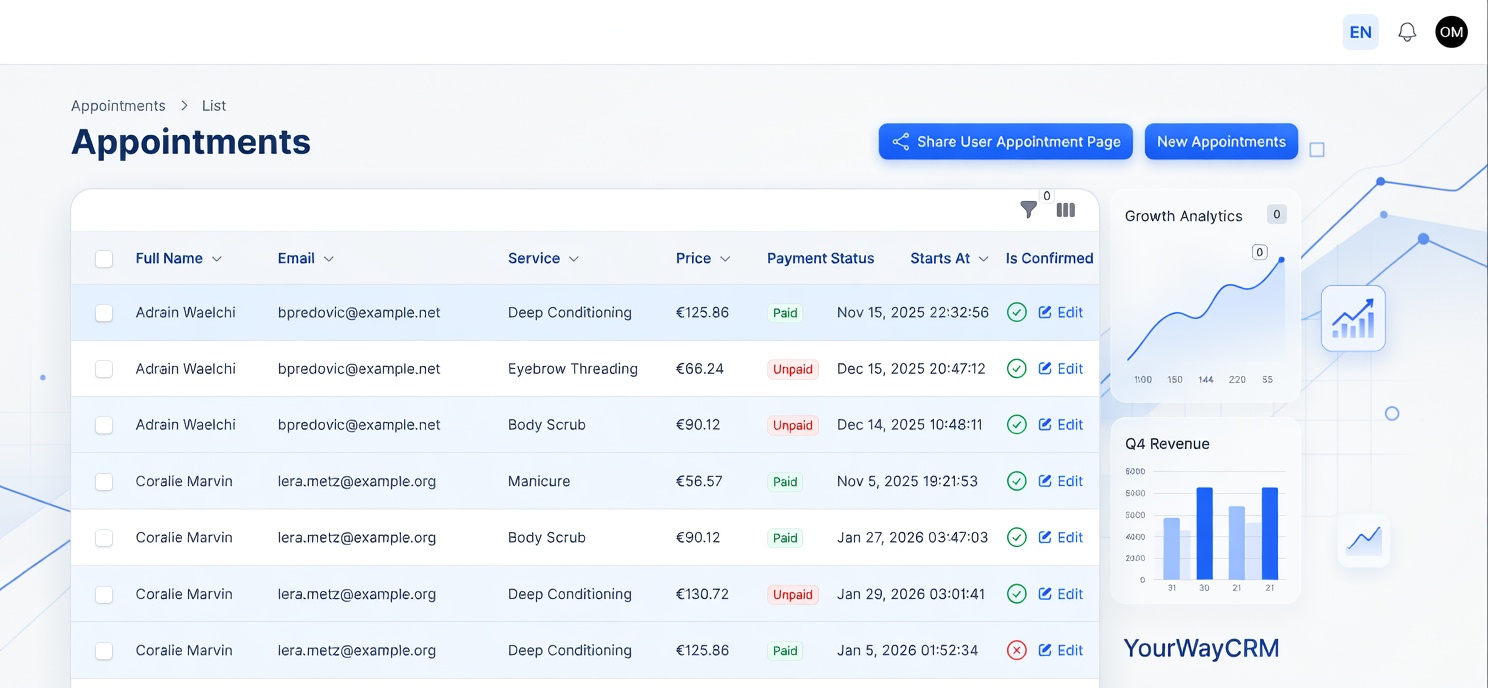
Practice management software like YourWayCRM can automate this entirely. Clients book within your predetermined availability, reminders are sent automatically, and rescheduling follows your established rules. You've made one set of decisions upfront, and the system handles hundreds of instances consistently.
Create Standard Protocols for Common Scenarios
Decision fatigue intensifies when you face the same situation repeatedly but treat it as a new decision each time. Establish protocols for common scenarios:
- Late cancellations: Define your policy (e.g., full fee charged if less than 48 hours' notice) and communicate it upfront
- No-shows: Decide your response protocol in advance—follow-up contact, fee structure, re-engagement approach
- Fee discussions: Create a standard fee structure and review process rather than negotiating each case individually
- Documentation: Establish templates for session notes, treatment plans, and progress summaries
- Client communication: Standardize how and when you respond to emails and messages
These protocols aren't rigid; they're frameworks that eliminate the need to re-decide similar situations. When a client requests a cancellation with short notice, you consult your protocol rather than deliberating the decision.
Automate Routine Communications
Every email, text, or call you send manually is a small decision: what to say, when to send it, who needs to receive it. Automating routine communications eliminates these micro-decisions.
- Appointment confirmation messages sent automatically
- Reminder notifications at standardized intervals
- Cancellation acknowledgments
- Intake questionnaire distribution
- Session feedback requests
Automated communications also ensure consistency—every client receives the same professional message, without variation based on your energy level that day. This protects both your clients and your practice.
Simplify Your Documentation System
Clinical documentation is necessary and important, but decision fatigue often stems from unclear documentation processes. Practitioners spend cognitive energy deciding what to document, how detailed to be, and in what format.
Establish a documentation standard:
- Use consistent templates for different note types
- Define what information is essential versus optional
- Create a standardized structure (e.g., presenting issue, interventions, client response, plan)
- Set a time limit for documentation to prevent perfectionism
- Use digital systems with built-in structure rather than blank pages
When your documentation process is consistent and templated, you're not deciding what to document each time—you're following a proven system. This speeds up the process and reduces the cognitive load.
Batch Similar Tasks Together
Decision fatigue intensifies when you switch between different types of tasks. Rather than responding to emails throughout the day, scheduling appointments as they arrive, and updating notes between sessions, batch similar tasks:
- Schedule a dedicated time for administrative communication
- Process all scheduling requests in one session
- Complete documentation in a focused block after sessions
- Handle billing and payment matters at a set time
Batching reduces the cognitive switching cost and creates a rhythm to your day. Your mind isn't constantly shifting between clinical and administrative modes.
Use Technology to Reduce Manual Decisions
Modern practice management platforms are designed to eliminate decision fatigue. When you choose the right system—one that handles scheduling, reminders, documentation, and communication—you're outsourcing hundreds of small decisions to automation.
Look for tools that offer:
- Automated appointment reminders and confirmations
- Online scheduling with your availability rules built in
- Template-based documentation
- Automatic communication workflows
- Centralized client information
The time you invest in setting up these systems pays dividends by eliminating repetitive decisions every single day.
Protect Your Decision-Making Energy
Your mental energy is finite. Every decision—no matter how small—depletes your cognitive resources. By standardizing, automating, and batching administrative decisions, you preserve your decision-making capacity for what truly matters: providing excellent clinical care to your clients.
Start by identifying three administrative decisions you make repeatedly. This week, create a protocol or automation for each one. You'll immediately notice the mental space this creates—space you can redirect toward your clients and your own wellbeing.